
Remember biting into a tray full of cold, goopy putty and counting the seconds until it set? Yeah, we’re happy to leave that behind too. Here’s what happens during a digital orthodontic scan today: it’s quiet, quick, and has changed the first-visit experience for the better.
In this guide, you’ll learn exactly what a digital orthodontic scan is, how to prep, what the wand feels like in your mouth, how long the appointment takes, and what happens with your 3D model after. The short version? It’s quick, clean, and honestly kind of cool to watch.
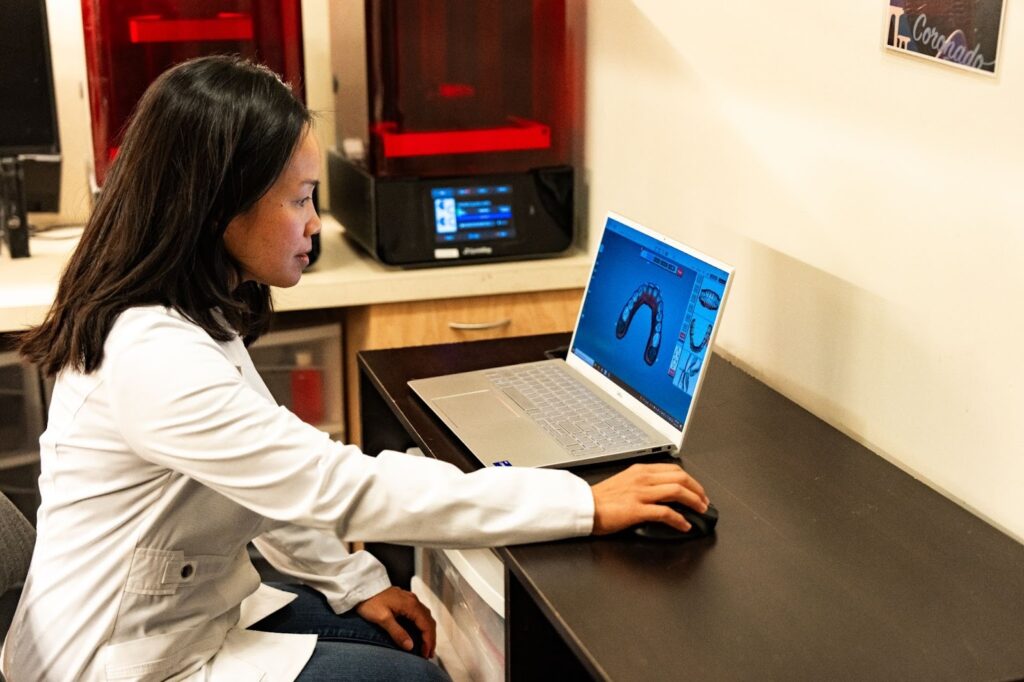
What Is a Digital Orthodontic Scan?
A digital orthodontic scan is a chairside procedure that uses a small handheld wand to capture thousands of images per second and build a highly accurate 3D model of your teeth, gums, and bite. It’s radiation-free, uses safe optical imaging, and replaces the old putty and alginate trays entirely. The whole thing is safe for kids, teens, and adults.
As the wand glides across your teeth, the software stitches those images together into a continuous digital map you can watch build in real time. Common systems you may hear about include iTero, 3Shape TRIOS, and CEREC.
Because everything is captured digitally, there’s no waiting for material to set, no shipping physical molds, and no risk of a distorted impression that has to be redone. A 2023 systematic review in the Saudi Dental Journal found that intraoral scanners are time-efficient, comfortable for patients, and sufficiently accurate for treatment planning and aligner fabrication.
How to Prepare for Your Scanning Appointment
Good news: there’s almost nothing you need to do beforehand. A few small steps just help things run smoothly.
- Brush and floss before your visit. Clean teeth give the scanner sharper, more accurate images.
- Skip the special prep. No fasting, no rinses, no restrictions. Eat normally.
- Arrive a few minutes early. That gives you time for check-in paperwork without feeling rushed.
- Bring your insurance info and any questions. Our team at is happy to walk you through coverage and next steps.
- Wear something comfy. You’ll be reclined for a short time, so comfort helps.
That’s really it. No lengthy prep list, no anxiety-inducing instructions.
Step-by-Step: What Happens During Your Digital Scan
Knowing the flow of your visit takes the guesswork out of it. Here’s exactly what to expect from start to finish.
- Check-in and brief consultation. You’ll be greeted by our team, wrap up any remaining paperwork, and meet the clinical assistant who will guide you through the visit. Bring your questions.
- Teeth cleaning and light drying. Before scanning starts, your teeth get a gentle cleaning and light drying. This step helps the wand capture crisp detail on every tooth surface.
- Wand insertion and image capture. Your clinician gently guides the small wand across your upper arch, lower arch, and bite. You’ll hear a soft clicking sound. You can breathe, swallow, and pause any time.
- Real-time 3D model builds on screen. A color 3D model of your teeth appears on the monitor beside you as the scan progresses. Watching your own smile build in 3D is one of the coolest parts of the visit.
- Treatment planning with Dr. Melanie. Once the scan is complete, Dr. Melanie sits down with you to review the 3D model, point out areas of focus, and walk you through a treatment plan built for you and your goals.
Start to finish, the visit tends to feel quick and relaxed.
What Does the Intraoral Scanner Wand Feel Like?
The intraoral scanner wand is about the size of an electric toothbrush handle, with a smooth tip that glides easily around your mouth. There’s no bulky tray pressing on the roof of your mouth and no thick material creeping toward your throat.
A few things to know about the sensation:
- No tray pressure on the palate, so the gag reflex usually isn’t an issue
- You can breathe and swallow normally the entire time
- The tip runs slightly warm, which actually prevents fogging as it captures images
- If you need a break, just raise your hand. Your clinician pauses and picks up right where they left off
Kids, teens, and adults with a sensitive gag reflex all tend to tolerate the scan easily. Many families are surprised at how casual it feels.

How Long Does a Digital Orthodontic Scan Take?
A digital orthodontic scan takes 5 to 15 minutes. The exact time depends on complexity and whether both arches and the bite are being captured. Simple cases can wrap up in under 10 minutes.
Your full visit, including check-in and your review with Dr. Melanie, usually runs 30 to 45 minutes. That’s often quicker than traditional putty impressions, which required holding filled trays in your mouth for several minutes per arch (and sometimes a redo).
Progress and monitoring scans are typically shorter, since we’re capturing updates to a smile we already have on file.
Digital Scans vs. Traditional Impressions: How They Compare
If you’ve ever had traditional impressions, you already know why so many orthodontists have made the switch. Here’s a quick side-by-side look:
| Feature | Digital Scan | Traditional Impression |
|---|---|---|
| Comfort | Small wand, no gag trigger | Bulky trays, often triggers gagging |
| Materials | None, fully digital | Alginate or putty in the mouth |
| Accuracy | Highly precise 3D data | Can distort or need retakes |
| Speed | Instant on-screen results | Wait for material to set |
| Storage | Secure digital files | Physical models take up space |
| Environment | No disposables | Single-use trays and materials |
Better accuracy also means better-fitting appliances, whether you’re getting custom braces, clear aligners, or retainers. And because your files are stored digitally, they’re easy to reference throughout your treatment.
What Happens After Your Scan: Treatment Planning and Next Steps
Once your 3D model is complete, Dr. Melanie walks you through it right on the monitor, pointing out tooth positions, spacing, bite alignment, and anything else worth discussing.
For many treatments, digital scans make outcome simulations possible. With clear aligners like ClinCheck-planned Invisalign, software can preview how your smile is projected to look at the end of treatment. Seeing that preview before you start is a pretty exciting moment.
Here’s what happens next at Dr. Melanie Orthodontics:
- Your digital files are securely sent to the lab
- Aligners or appliances are fabricated and typically arrive within a few weeks
- Your scan is stored so we can keep tabs on progress and compare over time
- Any updates to your treatment plan can be made using the same digital record
From that first scan to your final smile, everything connects.
Are There Any Downsides to Digital Orthodontic Scans?
Digital scans are a big upgrade, but let’s be straight with you. A few situations still call for extra care or a traditional approach.
- Learning curve. Scanning takes practice. The Saudi Dental Journal review noted a real learning curve for clinicians, and experienced operators get the smoothest results.
- Soft tissue and deep gum areas. Very deep subgingival zones can be harder to capture and may need an extra pass.
- Extensive dental work. Crowns, veneers, or implants sometimes require additional scan passes to map cleanly.
- Technology cost. Scanners are an investment, which can affect pricing at some practices.
- A few edge cases. In rare situations, a traditional impression may still be the right call. will let you know if that’s ever the case.
Being upfront about limitations is part of how we do things at Dr. Melanie Orthodontics. Most patients get everything they need from a single digital scan, no putty required.
Frequently Asked Questions
Is a digital scan safe?
Yes. Digital intraoral scans use safe optical imaging, not X-rays, so there’s no radiation involved. They’re considered safe for children, teens, adults, and patients who are pregnant. The wand is sterilized between uses, and you can pause the scan any time you need to.
How long does a dental monitoring scan take?
Progress and monitoring scans are typically shorter than an initial scan, often just a few minutes in the chair. Because your baseline 3D model is already on file, we’re just capturing updates to compare against your original scan and treatment plan.
Is a CT scan safe for braces?
Yes. Metal brackets and wires don’t prevent CT or CBCT imaging. Modern orthodontic imaging uses low-dose digital X-rays, and your provider will only recommend imaging when it’s needed for diagnosis or treatment planning. Digital scans themselves are separate and use no radiation at all.
Does insurance cover digital scans?
Coverage depends on your specific orthodontic benefits. In many cases, digital scans are included as part of your overall treatment or diagnostic workup. Our team is happy to review your plan, explain your benefits, and walk through flexible financing options if you need them.
Can children get digital scans?
Absolutely. Kids often prefer digital scans over traditional impressions because there’s no putty, no strong taste, and no gag reflex to fight through. The process is short, gentle, and easy to pause. It’s a great fit for your kiddo, including patients with sensory sensitivities.

Ready to See Your Smile in 3D?
Curious what a modern orthodontic visit actually looks like? Digital scans are quick, comfortable, and remarkably accurate. You’ll walk out with a clear picture of what your smile can become.
At Dr. Melanie Orthodontics, our team can show you how easy the modern experience really is. Schedule a consultation to meet and see your smile in 3D.